
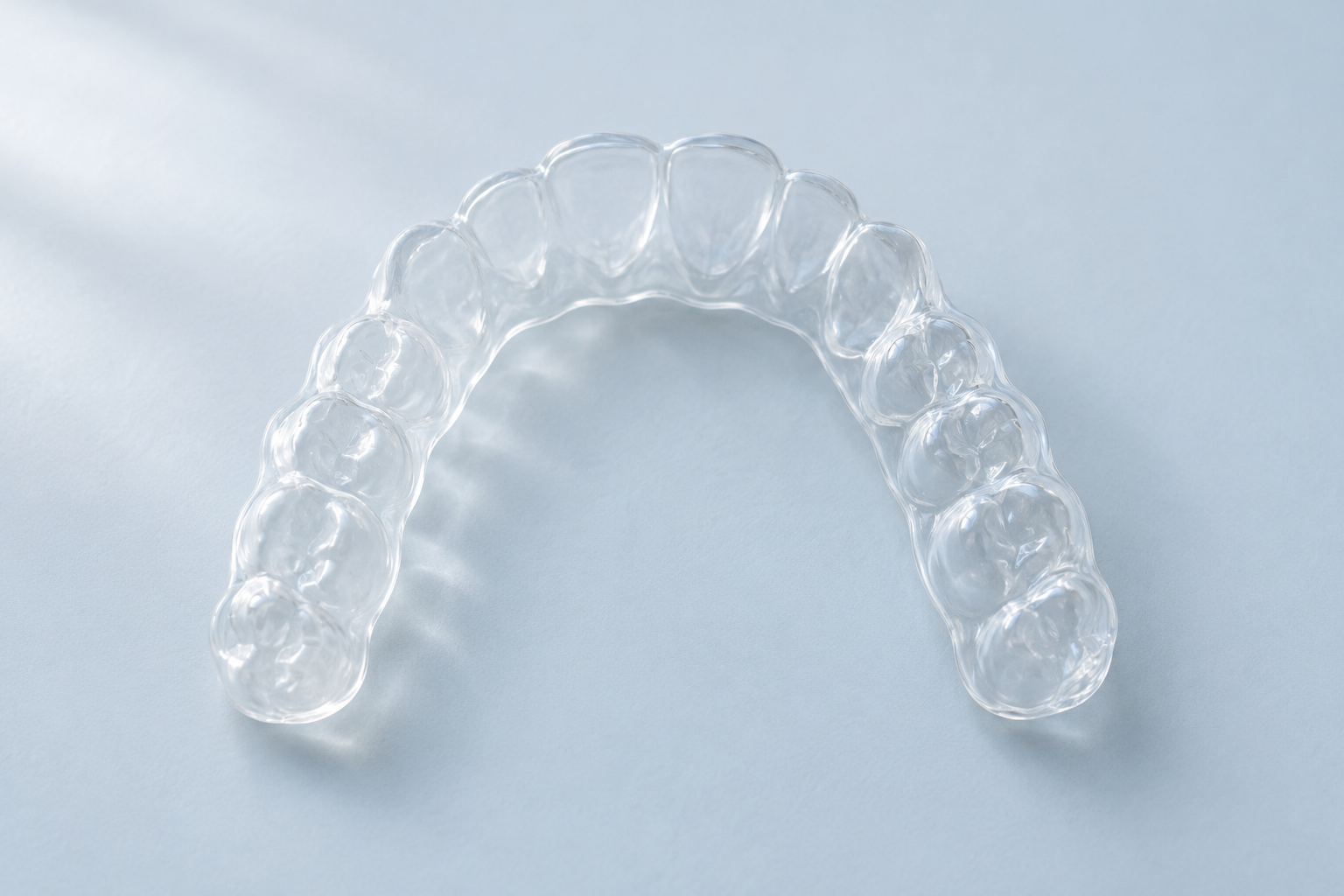
Finishing braces or clear aligners is an exciting milestone. Keeping your result is the next part of treatment. Teeth can continue to move after orthodontic care, so a retainer helps hold them in their new positions. Here is what to know about wearing and caring for one.
Why can teeth move after treatment?
Braces and aligners guide teeth into new positions, but removing them does not freeze those positions forever. The bone and tissues around the teeth continue to adapt, and ordinary forces from biting, chewing, and aging can affect alignment over time. Some movement is possible even years later.
A retainer is designed to limit unwanted movement. Wearing it as directed is the most useful step you can take to maintain the result of your treatment.
What does a clear retainer do?
A clear, Essix-style retainer is a removable plastic tray made to fit over your teeth. It holds their positions rather than moving them through a planned series of steps like treatment aligners. Other patients may use a removable retainer with a wire or a fixed wire behind the teeth. The right type depends on your treatment and your provider’s recommendation.
Your wear schedule is individual. Some people are asked to wear retainers more often soon after treatment and later only at night. Follow the instructions you receive for your own retainer instead of assuming someone else’s schedule applies to you.
Small habits that protect your retainer
Keep a removable retainer in its case whenever it is out of your mouth. A napkin or pocket makes it easy to lose or damage. Clean it with a soft-bristled toothbrush, mild antibacterial soap, and lukewarm water, then rinse it thoroughly. Keep it away from hot water or heat, which can distort the plastic. Continue brushing, flossing, and regular dental visits too.
If your retainer cracks or changes shape, contact your orthodontic provider. A damaged retainer may no longer fit or hold your teeth as intended.
What if it feels tight, does not fit, or goes missing?
A retainer that feels slightly snug may signal a small change, but one that will not seat fully or causes significant pain should not be forced into place. Your provider can check whether the appliance has changed shape, whether your teeth have moved, and what to do next.
If you lose your retainer, reach out promptly about a replacement. The longer you go without the prescribed retention, the more opportunity your teeth have to shift. An evaluation may lead to a new retainer or, if more movement has occurred, a discussion of other options.
Your new smile deserves a long-term plan
Retention is part of orthodontic care, not an afterthought. If you have questions about how often to wear your retainer, how to clean it, or whether it still fits, ask us. A plan that suits your teeth and daily routine is the best place to start.